Apply
Apply
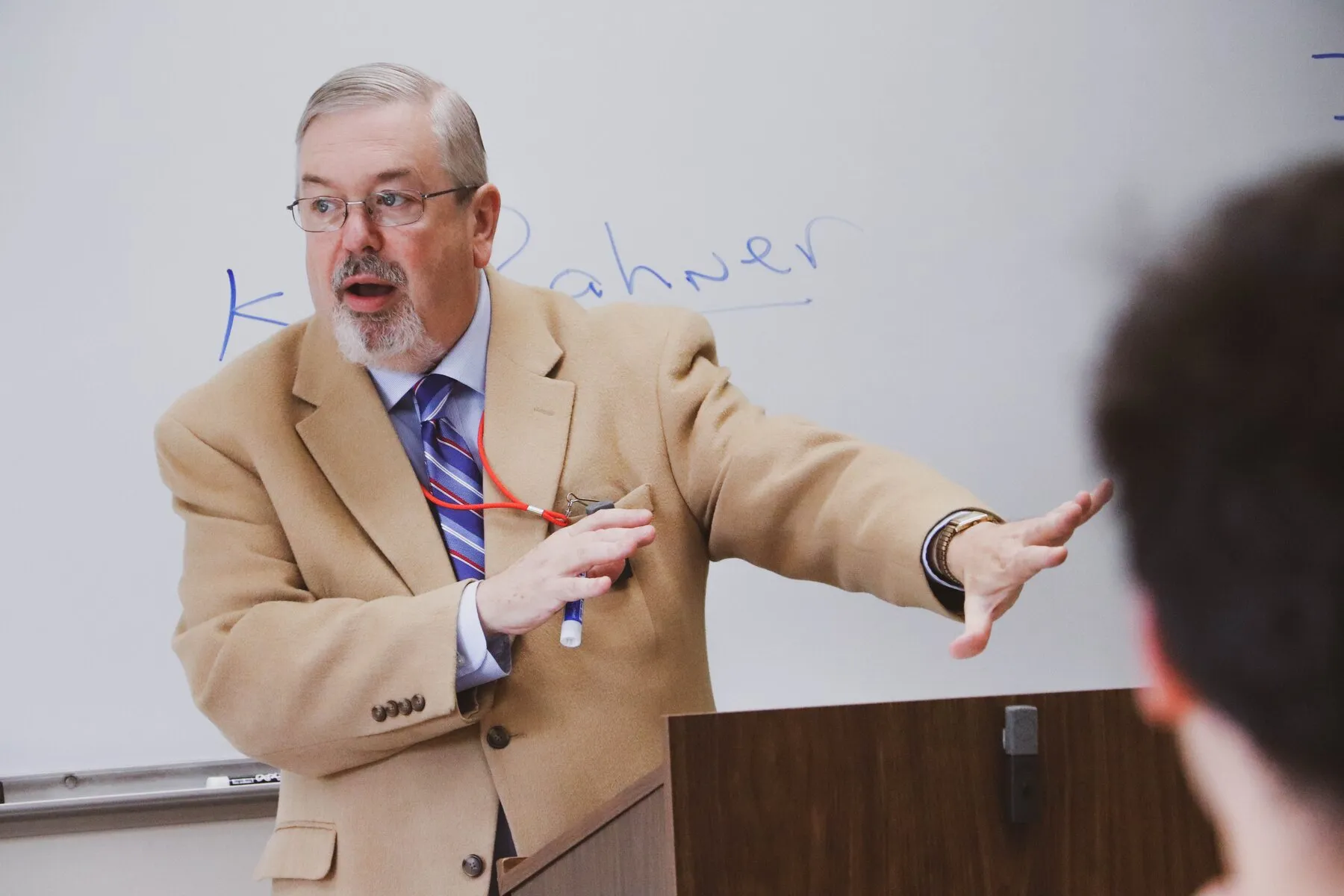
Dr. Alan Strange teaching at the whiteboard
About

Mission & Beliefs

Our purpose is to prepare pastors for gospel ministry and to train others to serve in various Christian venues. That purpose becomes clear in a curriculum designed to develop our Master of Divinity students intellectually, pastorally, and spiritually.

Our instructors provide a thorough instruction in God’s Word and a solid grounding in the Bible’s essential doctrines, while the practical theology courses and Ministerial Apprenticeship Program give students real-world experience. This is supplemented by our close, supportive community who encourages the spiritual maturity of our students.

Students enrolled in our Master of Theological Studies program also enjoy the benefits of this well-developed purpose. We provide solid theological and practical training to others whose vocational intention will benefit from a robust theological education.

Location and background are important aspects of the Seminary, but far more important is the Seminary’s unashamed commitment to Scripture and dedication to practical ministry.
President’s welcome

Soli Deo Gloria

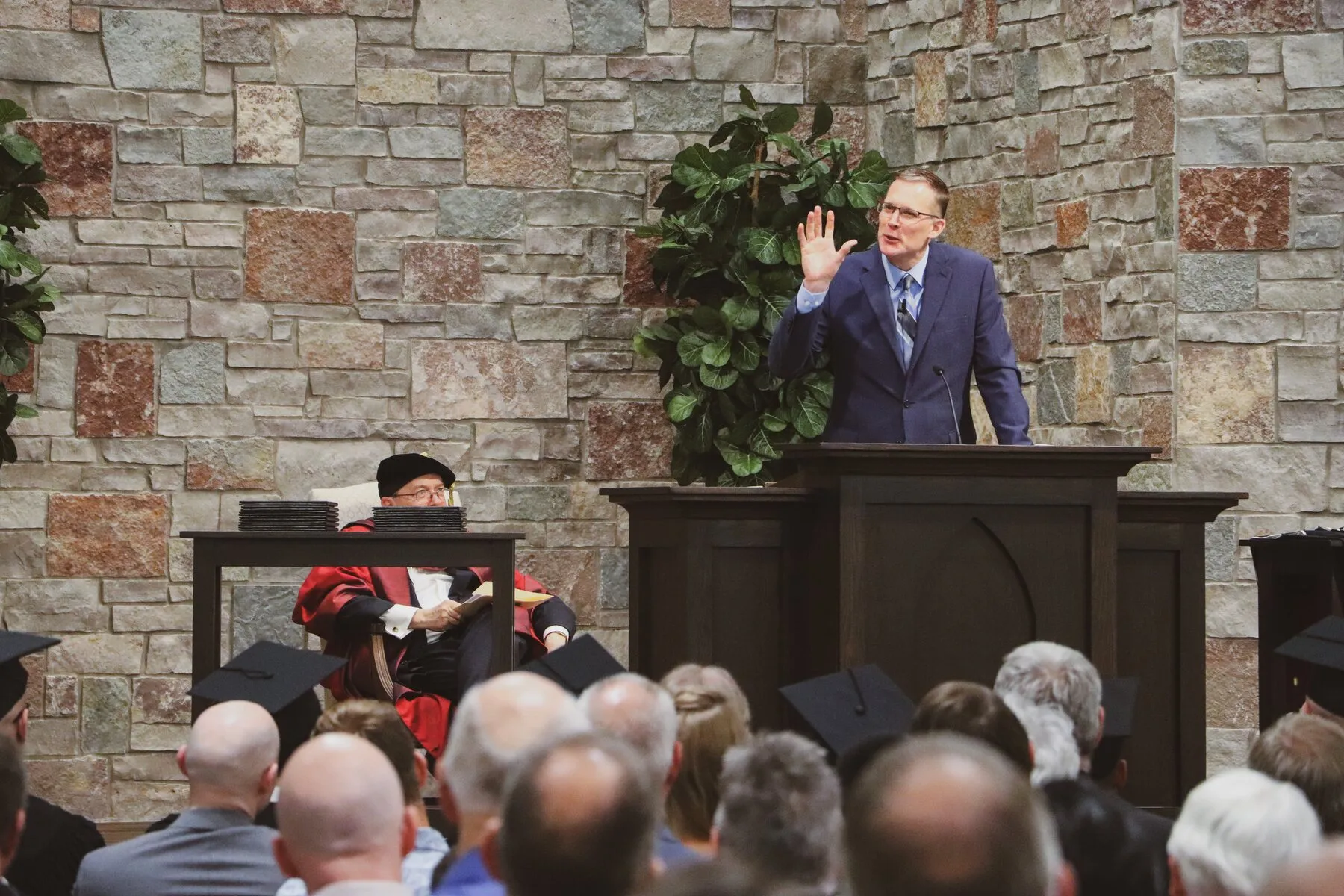
As I assume the responsibilities of President of Mid-America Reformed Seminary, I would like heartily to thank my predecessor, Dr. Cornel Venema. Dr. Venema has served with distinction over the decades as a systematics professor and our chief administrator. It will be odd not to have him regularly among us (he’s promised as President Emeritus to be with us some, perhaps even doing some teaching), and he will be greatly missed in his vital leadership role. We are truly grateful for all his service among us and look forward to the Lord’s blessing upon his writing, preaching, etc., as he continues in kingdom service.

I think most of you know that I’ve labored here in various capacities for twenty-five years, chiefly as a professor of church history. I intend to get to know many of you much better than I have as I assume my new presidential role, and I look forward to that, hoping to “get out” even more into the churches and homes of our friends and supporters. I pledge to all of you to do everything within my power to serve you faithfully, as I took vows to do so, administered by Dr. Venema in May, in the presence of the whole Board. I will seek to be faithful, first, to the Word of God. It alone is a direct, divine revelation from our Lord God, enjoying verbal, plenary inspiration, being infallible and inerrant.

The Word alone serves as our foundation, the source of all our doctrine, and the guide for life. Thankfully, the Lord has not given us this Word and left us without illumination. He has graciously, by the Holy Spirit, given light to his church rightly to understand the Word, and the church has expressed its understanding in the ecumenical creeds and the Reformed confessions and catechisms. To these, I also pledge my undying commitment: these expressions of the church’s faith serve as the expression of my own personal faith. My commitment to God and his Word has been and remains rock solid, as does my affirmation of the church’s creeds and confessions/catechisms. My desire is not to modify the precious tenets of our faith but to live more fully in accordance with them, to be more faithful as a Reformed and Presbyterian churchman.

This last point highlights that as to the doctrine of the church and her polity, I am a committed Presbyterian, ministerial member of the Presbytery of the Midwest of the OPC and an associate pastor in our local church, First Church (South Holland, IL). All of us are Reformed and Presbyterian in some sense: Reformed in our doctrine and Presbyterian in our polity. I am fully committed to the Reformed and Presbyterian Church Orders. While there are some differences between the Reformed and Presbyterian bodies, we have far more in common than separating us, and I pledge to work with the URC, OPC, PCA, RCUS, and all other bodies that are the natural constituents of Mid-America Reformed Seminary. I’ve been, for instance, in countless URCs in the U.S. and Canada for preaching and conferences and am quite drawn to those churches in their doctrine, worship, etc. I look forward to visiting old friends and making new ones in these churches. We have so much to offer these churches, and I hope soon to be reminding or sharing that with many of you.

I am a Reformed and Presbyterian churchman not out of convenience but out of the conviction that this is the fullest and truest expression of the Christian faith, or, as Warfield put it, Christianity come into its own. I firmly believe that what our sinful world needs more than anything is the gospel of our Lord Jesus Christ, and the Reformed faith is, as has been said, but a nickname for the gospel. That is what I pledge, together with all my colleagues, to seek to inculcate in all our students—this passion for the gospel, the good news that Jesus Christ has come to save his people from their sins. I solemnly vow to do all within my power to help the churches fit those they see as graced and gifted for gospel ministry to develop those gifts to be used in the mission of the church as it evangelizes and disciples in every people group (nation) throughout the world. This, together with training for other kingdom service (teaching, translation work, etc.), is what I am committed to doing in this new venture together, carrying on the legacy of Dr. Venema as we go forward, seeking to serve more faithfully than ever the calling and commission that is ours as a Reformed theological seminary.

It is truly my joy and delight to labor with all the faculty, administration, and staff as we go forward in service together, seeking to wash the feet of the saints so that all may serve to the fullest. Soli Deo Gloria!

Alan StrangeDr. Alan Strange, President, Mid-America Reformed Seminary

Our mission

Servants for the Kingdom of God

Mid-America Reformed Seminary serves Christ and his church by assisting in the formation and preparation of servants for the Kingdom of God. Our primary purpose is to train men for the gospel ministry of Jesus Christ in confessional Reformed and Presbyterian churches. We also provide solid theological training for others among God’s people whose life calling may be enhanced by theological education.

As our students engage in ministry life while pursuing studies, they encounter a vigorous curriculum offering courses in biblical, theological, ecclesiastical, and ministerial studies. This solid grounding in biblical doctrine is foundational in the training of godly men as they prepare to serve in the ministry of the Word and sacraments with a servant’s heart.

Our Core Distinctives

  1. A preacher in the seminary chapelI

    Gospel Centered

    It is our core conviction that Christ builds his church by his Spirit and Word. The proclamation of the gospel of Christ and his saving work lies at the core of the church’s mission in the world.

  2. Faculty and students greeting one another in the hallwayII

    Pastorally Focused

    We exist to serve the church. A healthy church depends on the faithful ministry of God’s Word. Our mission is to provide the best training possible for students who are preparing for gospel ministry.

  3. A student reading among bound volumes in the libraryIII

    Scripturally Committed

    We are wholeheartedly committed to the supreme authority and complete truthfulness of the Word of God – the Old and New Testaments – which are the standard for everything we do.

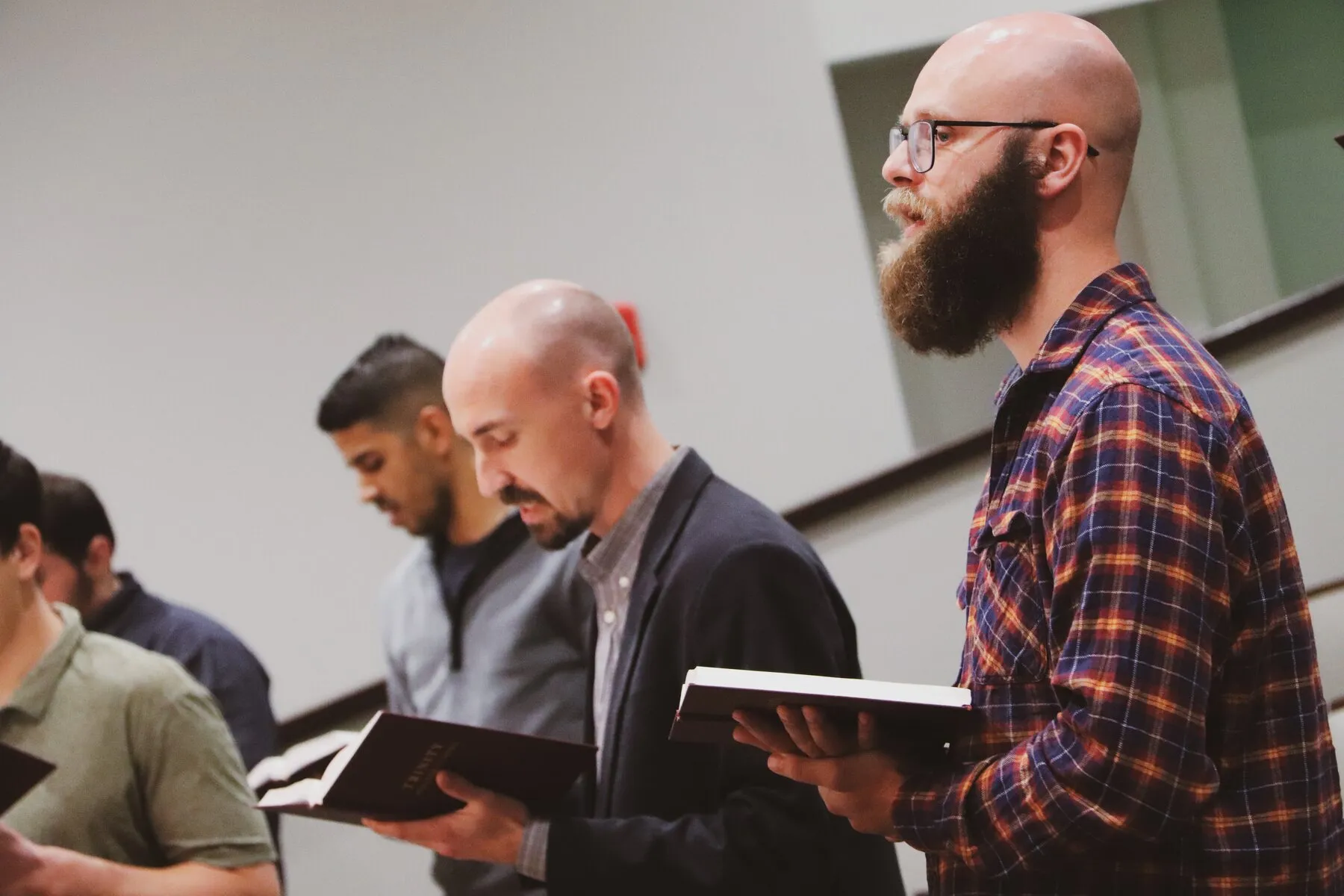
  4. Students singing from hymnals in chapelIV

    Creedally and Confessionally Informed

    The historic Christian creeds coupled with the Three Forms of Unity and the Westminster Standards set the parameters for our course of instruction.

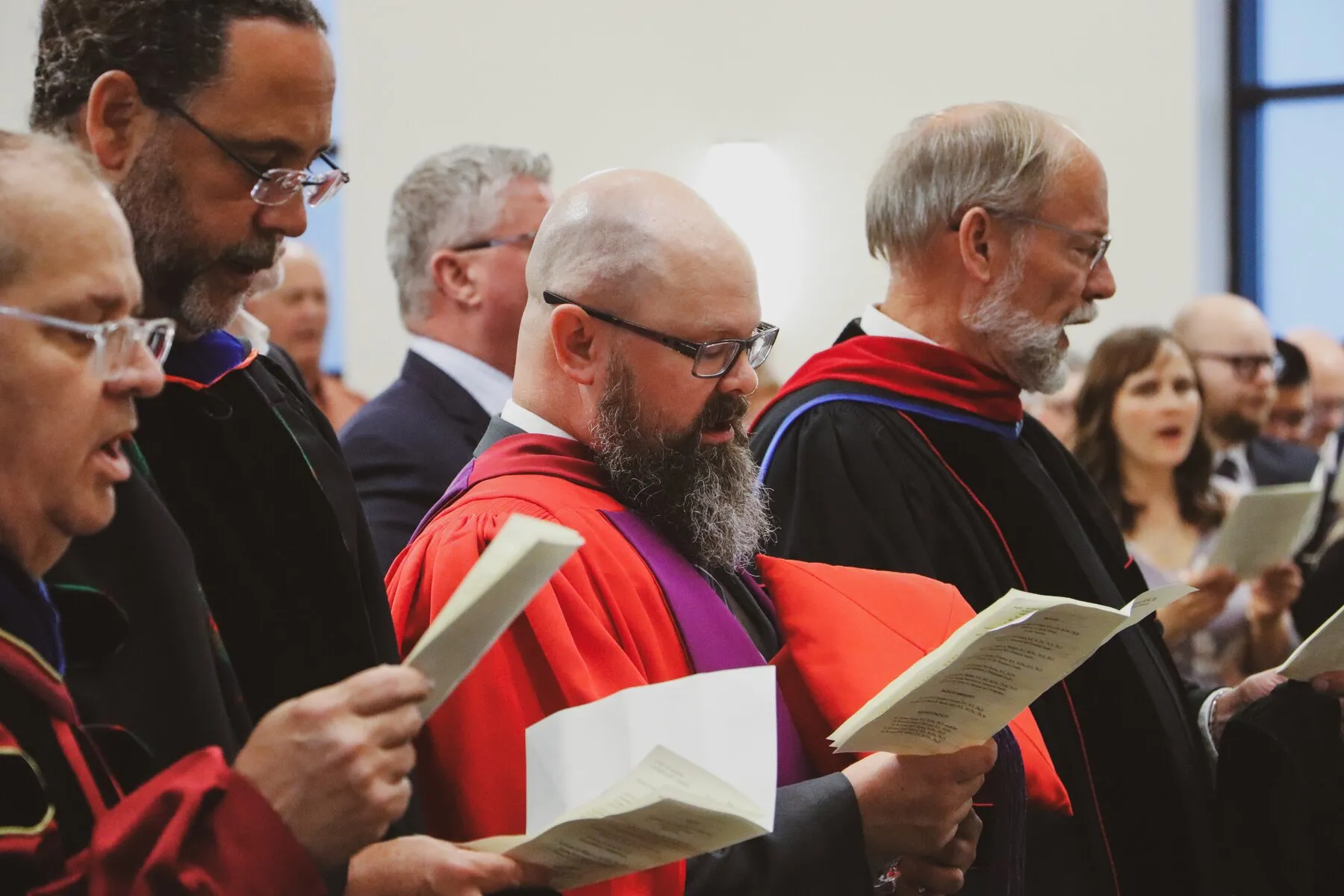
Faculty in academic regalia singing at commencement
Our story

The Lord provides

More than forty years ago, eight pastors met weekly for fellowship at the Iron Horse restaurant in Sheldon, Iowa. They discussed the need to equip men for ministry with confessional awareness and gospel preaching. After several months, they decided to begin a new institution.

The concept became reality during 1981, when seventy guests approved the proposal for a new seminary, pledged support, and formed the Mid-America Reformed Seminary Association.

Read the full history

What we believe

Doctrinal Statements

The doctrinal statement is an extract of statements from the Belgic Confession and other Reformed Confessions that articulate Mid-America’s doctrinal position.
The Trinitarian Nature of God

“According to this truth and this Word of God, we believe in one only God, who is the one single essence, in which are three persons, really, truly, and eternally distinct according to their incommunicable properties; namely, the Father, and the Son, and the Holy Spirit. The Father is the cause, origin, and beginning of all things visible and invisible; the Son is the word, wisdom and image of the Father; the Holy Spirit is the eternal power and might, proceeding from the Father and the Son. Nevertheless, God is not by this distinction divided into three, since the Holy Scriptures teach us that the Father, and the Son, and the Holy Spirit have each His personality, distinguished by Their properties; but in such wise that these three persons are but one only God” (Art. VIII).

The Full Deity and Humanity of Christ

“We confess therefore, that God has fulfilled the promise which He made to the fathers by the mouth of His holy prophets, when He sent into the world, at the time appointed by Him, His own only-begotten and eternal Son, who took upon Him the form of a servant and became like unto man, really assuming the true human nature with all its infirmities, sin excepted; being conceived in the womb of the blessed virgin Mary by the power of the Holy Spirit without the means of man; and did not only assume human nature as to the body, but also a true human soul, that He might be a real man” (Art. XVIII). Or, that “God’s eternal Son, who is and continues true and eternal God, took upon Himself the very nature of man of the flesh and blood of the virgin Mary, by the operation of the Holy Spirit, that He might also be the true seed of David, like his brethren in all things, sin excepted” (Heidelberg Catechism, Lord’s Day XIV).

The Inerrancy and Historicity of the Bible

The Bible is “His holy and divine Word” (Art. II), which “was not sent or delivered by the will of man, but that men spoke from God, being moved by the Holy Spirit, as the apostle Peter says” (Art. III). Furthermore, God “commanded His servants, the prophets and apostles to commit His revealed word to writing. . . . Therefore we call such writings holy and divine Scriptures” (Art. III). “We believe that the Holy Scriptures are contained in two books, namely, the Old and New Testament, which are canonical, against which nothing can be alleged” (Art. IV, which then goes on to name the sixty-six books of the Bible). “We receive all these books, and these only, as holy and canonical, for the regulation, foundation, and confirmation of our faith; believing without any doubt all things contained in them, not so much because the Church receives and approves them as such, but more especially because the Holy Spirit witnesses in our hearts that they are from God, and also because they carry the evidence thereof in themselves” (Art. V). “We believe that those Holy Scriptures fully contain the will of God, and that whatsoever man ought to believe unto salvation is sufficiently taught therein . . . it is unlawful for any one, though an apostle, to teach otherwise than we are now taught in the Holy Scriptures . . . since it is forbidden to add unto or take away anything from the Word of God, it does thereby evidently appear that the doctrine thereof is most perfect and complete in all respects . . . we reject with all our hearts whatsoever does not agree with this infallible rule which the apostles have taught us” (Art. VII).

The Divine Work of Non-Evolutionary Creation Including Persons in God’s Image

“We believe that the Father by the Word, that is, by His Son, has created of nothing the heaven, the earth, and all creatures, when it seemed good to Him, giving unto every creature its being, shape, form, and several offices to serve its Creator” (Art. XII). We also believe that it “pleased God the Father, Son, and Holy Ghost, for the manifestation of the glory of his eternal power, wisdom and goodness, in the beginning, to create, or make of nothing, the world, and all things therein whether visible or invisible, in the space of six days; and all very good” (Westminster Confession, Chapter IV, Art. I).

The Redemptive Work of Jesus through His Death and Resurrection

“We believe that God, who is perfectly merciful and just, sent His Son to assume that nature in which the disobedience was committed, to make satisfaction in the same, and to bear the punishment of sin by His most bitter passion and death. God therefore manifested His justice against His Son when He laid our iniquities upon Him, and poured forth His mercy and goodness on us, who were guilty and worthy of damnation, out of mere and perfect love, giving His Son unto death for us, and raising Him for our justification, that through Him we might obtain immortality and life eternal” (Art. XX). “That Christ, in the sight of His disciples, was taken up from earth into heaven, and there continues for our interest, until He comes again to judge the living and the dead” (Heidelberg Catechism, Lord’s Day XVIII).

Salvation by Grace through Faith

“We believe that, to attain the true knowledge of this great mystery, the Holy Spirit kindles in our hearts an upright faith, which embraces Jesus Christ with all His merits, appropriates Him, and seeks nothing more besides Him.” Also, therefore “we justly say with Paul, that we are justified by faith alone, or by faith apart from works.” And finally, “… faith is an instrument that keeps us in communion with Him in all His benefits, which, when they become ours, are more than sufficient to acquit us of our sins” (Art. XXII).

The Second Coming of Christ

“Finally, we believe… that our Lord Jesus Christ will come from heaven, corporally and visibly, as He ascended, with great glory and majesty to declare Himself Judge of the living and the dead, burning this old world with fire and flame to cleanse it. Then all men will personally appear before this great Judge, both men and women and children, that have been from the beginning of the world to the end thereof… and the dead judged according to what they shall have done in this world, whether it be good or evil.” The wicked “shall become immortal, but only to be tormented in the eternal fire which is prepared for the devil and his angels. But on the contrary, the faithful and elect shall be crowned with glory and honor; the Son of God will confess their names before God His Father and His elect angels; (and) all tears shall be wiped from their eyes…” (Art. XXXVII).

The Reality of Heaven and Hell

In connection with both the ascension into heaven of the Lord Jesus Christ and his final return to judge the living and the dead, we believe and confess the reality of heaven and hell. To the question, “What comfort is it to you that Christ shall come to judge the living and the dead?,” the answer is given: “That in all my sorrows and persecutions, with uplifted head I look for the very same Person who before has offered Himself for my sake to the tribunal of God, and has removed all curse from me, to come as Judge from heaven; who shall cast all His and my enemies into everlasting condemnation, but shall take me with all His chosen ones to Himself into heavenly joy and glory” (Heidelberg Catechism, Lord’s Day 19, Q/A 52).

Concerning the state of men after death, and of the resurrection of the dead, we believe and confess that “The bodies of men, after death, return to dust, and see corruption: but their souls, which neither die nor sleep, having an immortal subsistence, immediately return to God who gave them: the souls of the righteous, being then made perfect in holiness, are received into the highest heavens, where they behold the face of God, in light and glory, waiting for the full redemption of their bodies. And the souls of the wicked are cast into hell, where they remain in torments and utter darkness, reserved to the judgment of the great day. Beside these two places, for souls separated from their bodies, the Scripture acknowledgeth none” (Westminster Confession, Chapter 32).

The Existence of Satan

“He also created the angels good, to be His messengers and to serve His elect; some of who are fallen from that excellency in which God created them into everlasting perdition, and others have by the grace of God remained steadfast and continued in their first state. The devils and evil spirits are so depraved that they are enemies of God and every good thing… and are, therefore, by their own wickedness adjudged to eternal damnation” (Art. XII). But “man, through the instigation of the devil, by his own willful disobedience, deprived himself and all his posterity of these gifts” (Heidelberg Catechism, Lord’s Day IV).

Concerning the historical fall of man into sin, “We believe that God created man out of the dust of the earth, and made and formed him after His own image and likeness, good, righteous, and holy . . . but (man) willfully subjected himself to sin and consequently to death and the curse, giving ear to the words of the devil” (Art. XIV). “We believe that through the disobedience of Adam original sin is extended to all mankind. . .” (Art. XV).

Doctrinal Testimony Regarding Recent Errors (2007)

The current climate of theological discussion has revealed a number of errors that are having harmful effects within confessionally Reformed churches and are subverting the understanding of the gospel as articulated and affirmed in the Reformed confessions. The faculty has published a Doctrinal Testimony Regarding Recent Errors. The purpose of this document is to identify carefully, to explain clearly, and to evaluate pastorally those errors of teaching.

The faculty and Board of Trustees of Mid-America Reformed Seminary unwaveringly subscribe to the Three Forms of Unity (the Belgic Confession, the Heidelberg Catechism, and the Canons of Dort) and the Westminster Confession of Faith. We also hold in high regard the numerous Reformed confessions produced in the wider body of Reformed churches in the sixteenth and seventeenth centuries. In light of our vows of subscription and commitment to defend the teachings of Scripture, we are duty bound to address some of the theological errors threatening confessionally Reformed and Presbyterian churches today.

What the Faculty Teaches Regarding the Days of Creation

We are aware that several Reformed churches or denominations have been discussing the issue of the length of the days of creation. Some, such as the Orthodox Christian Reformed Church and the Reformed Church in the United States, have adopted positions on this matter. Other churches have not adopted a formal statement or position, such as the United Reformed Churches in North America and the Orthodox Presbyterian Church.

Within this ecclesiastical situation, it is important to keep in mind that Mid-America Reformed Seminary is not under any direct ecclesiastical control, although its Board and Faculty subscribe wholeheartedly to the Three Forms of Unity and the Westminster Confession, and the Seminary professors are under the supervision of church elders. Therefore, members of the Faculty of Mid-America Reformed Seminary do not and cannot serve in the capacity of official spokesmen for any ecclesiastical body, except insofar as they are authorized to do so by such a body.

With these observations in mind, we declare that in our public writings and in our classroom teaching, we hold that the six days of creation are to be understood as consecutive, real (i.e., literal) days of alternating evenings and mornings. In other words, the word “day” in Genesis 1 should not be understood as a “day-age” (i.e., some long age of an indefinite number of years). Both the Board and the Faculty of Mid-America Reformed Seminary fully agree that the WCF IV.i. accurately teaches what the Bible states in Exodus 20:11 concerning God’s creation of the world in six days.

There is no one on the Faculty at Mid-America Reformed Seminary who teaches or subscribes to the framework hypothesis. Furthermore, the Seminary Board has not hired anyone to teach who does not hold to the above position on the creation days. We hold firmly to the special creation work of God, performed in the space of six consecutive, real days. In addition, we also declare and teach that the confessional (im)permissibility of any particular teaching about the creation days must be determined by the churches responsible for the doctrine and life of Faculty members.

(Adopted by the Board of Trustees, October 19–20, 2000)
Mid-America Faculty Members on Justification

The faculty of Mid-America wrote a series of articles on the doctrine of justification for an issue of the Mid-America Journal of Theology (Journal 16, 2005).

Religious affiliation

Confessional, and not governed by any denomination

Mid-America is closely associated with confessional Reformed and Presbyterian churches; however, it is not governed by the rules of any denomination. All members of Mid-America’s Association and the Board of Trustees, which governs the Seminary and its activities, and the members of the faculty, are wholeheartedly committed to the Holy Scriptures as the infallible and inerrant Word of God; and in conformity with the Word, to the ecumenical creeds of Christendom (the Apostles’, Athanasian, and Nicene Creeds); and to the following Reformation Confessions: the Belgic Confession, the Heidelberg Catechism, the Canons of Dort, and the Westminster Confession of Faith.

Accreditation

The Association of Theological Schools

Mid-America Reformed Seminary is a member of The Association of Theological Schools in the United States and Canada. ATS, through its commission on accrediting, is recognized by the United States Department of Education and by the Council for Higher Education Accreditation for the accreditation of graduate professional theological schools in the United States.

Accredited by the Commission on Accrediting of the Association of Theological Schools in the United States and Canada, and the following degree programs are approved: MDiv, MTS.

The Commission on Accrediting of the Association of Theological Schools in the United States and Canada
10 Summit Park Drive, Pittsburgh, PA 15275 USA
Telephone 412-788-6505 · Fax 412-788-6510 · www.ats.edu

Statement of Educational Effectiveness

Accreditation

Statement of Educational Effectiveness

Mid-America Reformed Seminary is committed to providing high-quality theological education and ministerial preparation. To verify our effectiveness in achieving this goal, we regularly collect and analyze data from various sources, including student evaluations, faculty assessments, graduate feedback, ministerial advisor reports, and graduate placement data. This statement presents key indicators of our educational effectiveness over the past five years, offering insight into our students’ academic performance, ministerial readiness, and overall satisfaction with their seminary experience. The following data points reflect our dedication to excellence in theological education and our ongoing efforts to prepare people for ministry and other diverse forms of service.

  1. Mid-America Reformed Seminary demonstrates strong educational effectiveness across various metrics. Student satisfaction is very high, with an average rating of 4.76 out of 5 on course evaluations over the past five years.

  2. Graduate satisfaction with the Seminary is exceptionally high. In Graduate Exit Interviews conducted over the last five years, 100% of respondents indicated that they would recommend Mid-America Reformed Seminary to others. This strong endorsement from recent graduates speaks to the perceived value and quality of the education received.

  3. Job placement rates for Mid-America graduates are impressive. Over the last 20 years, the job placement rate for the Master of Divinity is 92.6% and has been even higher over the most recent five-year span, standing at 96.8%. These figures help indicate how well Mid-America graduates are prepared for successfully transitioning into relevant positions in their field of study.

  4. For the Master of Divinity (M.Div.) program, assessments of students show consistently positive learning outcomes. For example, over the last five years, blind faculty evaluations show that student sermons scored “good” or “excellent” in each key area of learning within the degree program 86.8% of the time. This indicates that M.Div. students are generally meeting or exceeding faculty expectations in their sermon preparation and delivery.

  5. Ministerial advisor evaluations further support the effectiveness of the M.Div. program. Over the last five years, pastoral advisors rated our graduates as meeting expectations for each key area of learning in the degree program 96% of the time. This high percentage suggests that M.Div. graduates are well-prepared for ministerial roles according to their advisors.

Together, all of this data points help demonstrate Mid-America Reformed Seminary’s strong track record of educational effectiveness, including high levels of student satisfaction, positive faculty and ministerial advisor evaluations, and an excellent job placement rate. For more information about these and other data points, please contact the Seminary.